During the recent DataEngBytes conference, there were multiple presentations showing boxes with arrows (as previously mentioned) and icons representing platforms. But across 8 speakers and 200+ slides, there was not a single mention of any of the most popular database engines. In the world of data engineering, relational databases barely get a mention yet they represent 95+% of the information systems in production. My LinkedIn feed is similarly devoid of relational databases, as are my threads from ‘data influencers’.
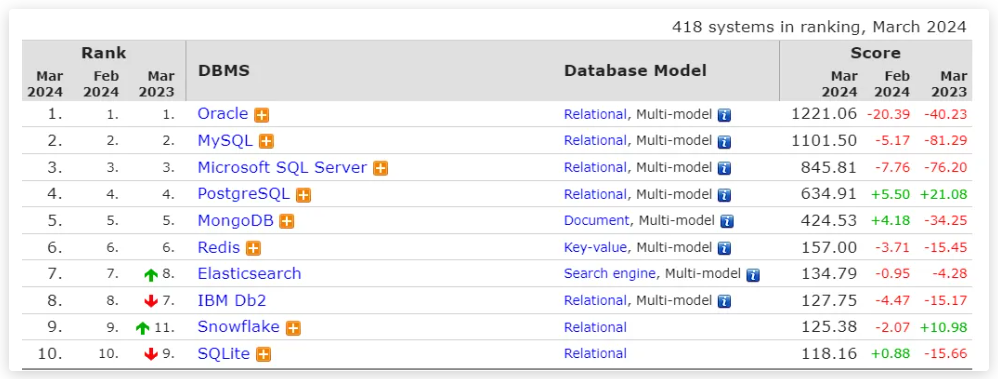
It’s not until we get to the 9th most popular database engine that we find a system that was talked about at the conference. I understand that there is a difference between operational systems and analytical systems, but the top 4 database engines do both. More importantly, the reality is the top 4 database engines are the providers of almost all of the source data for the analytical systems. Yet they are never mentioned.
If we are looking for evidence of why data in the enterprise is in crisis, here’s a pretty good starting point! The top 4 database engines cannot be ignored when talking about data engineering. If the data engineer doesn’t understand what is happening in the source systems, if they have zero visibility in what’s happening there, then that’s a primary cause for concern.
We can see that 7 of the top 10 database engines are ‘relational databases’. The Database Model reference here is the database engine and is considered such an important feature that it is included in the ranking. What remains a mystery is why there is so little discussion on LinkedIn and at data conferences about relational database engines. They still run the data world.